


Regardless of ability, places and spaces need to be available to everyone
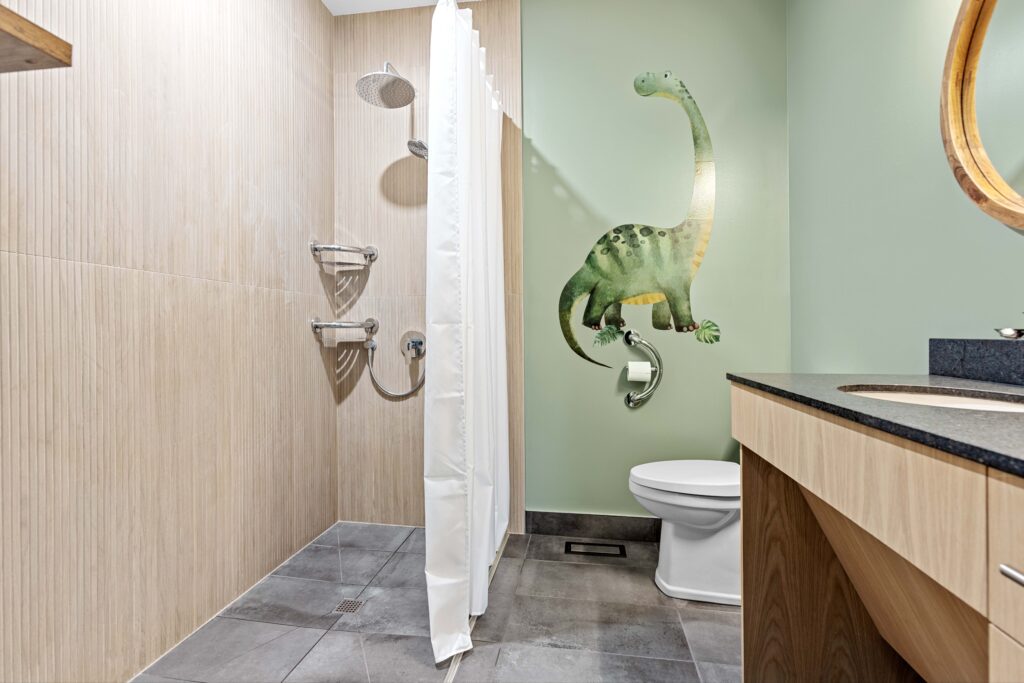
In this bathroom, the corner shelves and toilet paper holder are grab bars. The shower stall offers easy access for a wheelchair or a walker. Photo Credit Kyla MacGinnis
Accessibility is a human right. So says Nancy Edwards, professor emeritus in the School of Nursing at the University of Ottawa.
“Places and environments should be accessible to everyone, no matter their age, physical or cognitive abilities,” Edwards says. “When people talked about accessibility in the past, the focus was on those living with physical disabilities.”
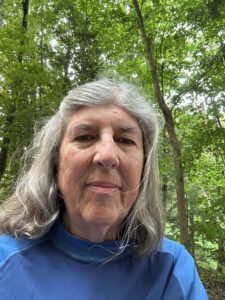
Nancy Edwards. Photo Credit Nancy Edwards
Today, this also refers universal accessibility, says Edwards, “where grab bars, levered door handles and good-grip handrails make getting around easier for everyone.”
There are many invisible health challenges that make it hard for people, even those without physical disabilities, to manage their environment.
This is where the United States is way ahead of Canada – in legislating accessibility requirements, says Edwards. “Vets returning from the Vietnam War really pushed the cause for accessibility and the ADA (American Disabilities Act) was passed in 1990. Federal accessibility legislation in Canada became law 2019. The Accessibility for Ontarian Disabilities Act was legislated in 2005. We’ve got some catching up to do.”
What’s included in the bucket of universal design features is increasing as these provide benefits and a better quality of life for everyone.
Accessibility also means visitability. “What if friends or family can’t even get into your home for a visit?” asks retired physiotherapist Christine Bidmead. “Not just seniors – what about a child or young person with a physical disability?”
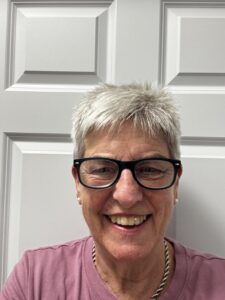
Christine Bidmead. Photo Courtesy Christine Bidmead
Bidmead adds that an accident can happen in a flash and create mobility issues. “If you break your leg, how are you going to navigate stairs? And getting up off a toilet or safely bathing without a grab bar is going to be really difficult.”
A proper handrail on your front exterior stairs and grab bars in your bathroom can make your home more accessible for everyone. “Those are two changes that are relatively inexpensive,” says Bidmead, “and the benefits increase visitabilty for all.”
According to Kyla MacGinnis, accessibility isn’t discussed enough, “and when we do, it usually centres around aging in place for seniors,” says the co-founder of BuildAble, an award-winning Ottawa renovation company that specializes in adaptive and accessible solutions. She is also a Professor of Community Health Nursing at the University of Ottawa. “But what about children with medical or mobility issues? At BuildAble we’ve termed it ‘Growing at Home’ for children and youth.”
At BuildAble, MacGinnis and her team look at specific needs so parents can see the options available to make a home more accessible, especially the bathroom.
“Your toddler’s mobility challenges are going to change as they grow,” says MacGinnis. “Good design can really help for every stage at every age. And universal design means it’s accessible for everyone.”

Kyla MacGinnis. Photo Courtesy Kyla MacGinnis
A bit of whimsy can be incorporated into the design, especially for a child. “We turned a broom closet into an ensuite bathroom with a dinosaur,” says MacGinnis, “and made it safe and accessible.”
The BuildAble team made the entry doors wider. The shower is zero-threshold, the corner shelves and toilet paper holder double as grab bars, the shower head is adjustable and the sink facets are levers with thermostatic locking controls. MacGinnis also looks at privacy features in bathrooms that teens appreciate and that can be tailored to their needs.
“The issue of accessibility is more far-reaching than you think,” says MacGinnis. “And often lack of accessibility means isolating a portion of the population. We had one client who put a lift in their garage and that meant that their daughter could visit them in their home. It was a small change that made a big difference for their daughter.”
“If you don’t live it, you don’t see it,” says Sarah Tait. Her son Nicholas is blind, and because of his mobility issues, is in a wheelchair. He turned 18 last November and as a single mom, Tait says it was getting harder to manoeuvre Nicholas. She reached out to BuildAble for suggestions and found they had great ideas.
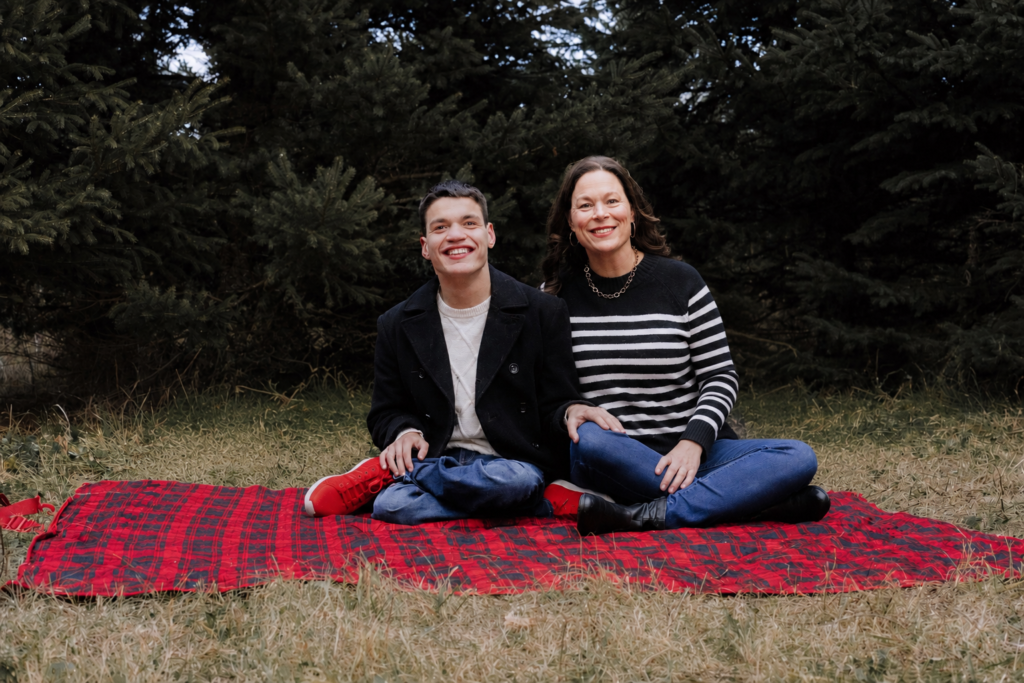
Sarah Tait, right, and her son Nicholas. Photo Courtesy Sarah Tait
“Kyla and her team changed the primary bathroom and created a roll-in shower and a roll-under sink. The doors were made more accessible and they put in studs for weight-bearing grab bars and towel bars. They also put in transitions to make all the rooms in the house easier to navigate.”
The changes to the bathroom were the most important and the custom-built cabinets not only look good but are functional for both her and her son, says Tait, who sits on the Accessibility and Age Friendly Committee for the town of Arnprior. In that role, she is helping to make everything accessible in the community.
“There are so many things that if you don’t have a mobility issue or a disability, you would never think of, like the turning radius for a wheelchair in public places or being able to reach the crosswalk button,” Tait says. “Small changes can make a big difference, and it means that community spaces are available to everyone.”
-30-
Useful websites
canada.ca/en/employment-social-development/programs/accessible-canada/act-summary.html
parachute.ca/en/introducing-parachute-ca/
arnprior.ca/town-hall/committees-and-boards/accessibility-and-age-friendly-advisory-committee/