


More than two decades later, a professor’s life advice still lives rent-free in the Dad’s Dispatch columnist’s mind
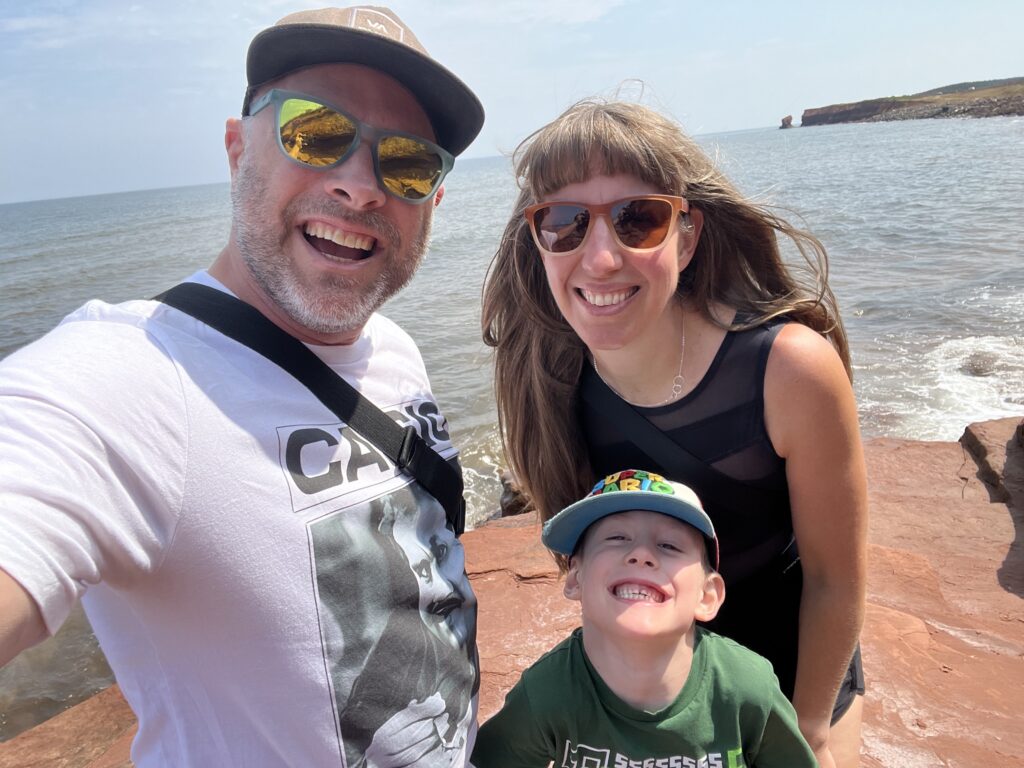
The author, his wife Nicole Willing and their son Miles enjoyed a trip to Prince Edward Island this summer, where the entire family played nice with others. Photo Credit Jon Willing
The best advice I’ve heard came from an instructor in journalism school at Western University.
“Don’t be a jerk,” the instructor told us, except he didn’t say “jerk” but instead a word that the Merriam-Webster dictionary defines as someone who is “spiteful and contemptible.” The word started with a P, if you need a little more precision.
It wasn’t the main lesson of the day. In fact, I can’t even remember what skill we were working on, though I know it had something to do with communicating with sources. But that off-the-cuff remark resonated for me more than any other advice I received through school and life in general. Now I’m dishing out that same advice to the college students I teach around this time of year as the fall term gets rolling.
It’s not the kind of advice that blows your mind when you hear it. After all, don’t we inherently know that being a jerk is horrible?
I like the advice because it’s a good reminder, especially for anyone starting a new school year or a new job. Keep the swagger, the confidence and the pride, but don’t become a jerk.
In journalism, there can be a fine line between being hard-nosed, tenacious and inquisitive and being a jerk. Your job is to ask tough questions to powerful people in pursuit of truth. Curiosity can turn to frustration when people stifle your efforts on tight deadlines and against tough competition. The pressure might bring out your inner jerk. You might have the urge to yell at someone. But your reputation is all you have in journalism. One episode of jerkiness could put larger obstacles in front of your next one, five or 50 stories.
Avoiding jerky behaviour is an important soft skill. No one likes a jerk and no one wants to help a jerk. People will let jerks flail. You don’t want to be a jerk to someone handling your food order or drilling your teeth.
Pop culture has platformed celebrities, usually men, whose jerky personas have fuelled their popularity: the angry chef, the pompous rapper, the insulting investor, the crass president. Being a jerk, or at least playing one, pays off. But as fun as it might be to be entertained by these characters, copying their behaviour in real life will likely repel people.
Making sure kids aren’t jerks is probably one of the most important responsibilities we have as parents. It begins at the home with siblings or at the park with other kids. We urge our kids to be kind and hope when they start school that they aren’t jerks to teachers and classmates. I often hear parents describe how they don’t necessarily care about their children’s academic prowess or size of their friend group — they just want their kids to be “good people.”
In other words, we don’t want our kids to become jerks.
In this month of new beginnings, let’s set an example for our kids, students or coworkers by not being jerks.
-30-