


Editor’s Note: This story is a part of our series, The Gift, which appeared in the March 2026 issue.
Dedicated to studying how kids think and learn, the University of Ottawa’s Living Lab has an ongoing search for volunteers. Will your family answer the call?
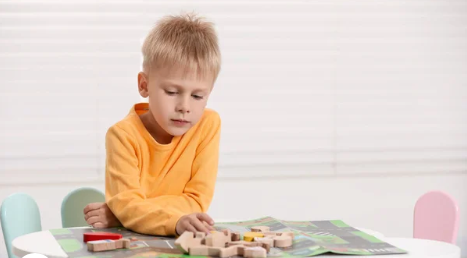
Children can contribute to science by participating in studies like the ones at uOttawa’s Living Lab at the Museum of Science and Technology. Photo Credit depositphotos.com NewAfrica
The Living Lab is an active University of Ottawa research centre housed within the museum’s ZOOOM Gallery.
“This is a great fit with the university,” says Jason Armstrong, director of visitor experience at the Canada Science and Technology Museum. “It not only reflects that the museum is building knowledge within its walls, but it shows how research works and why it’s important.”
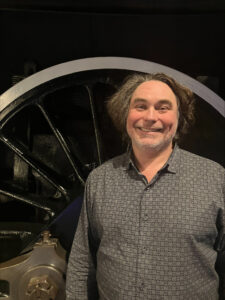
Jason Armstrong. Photo Credit Ingenium
Christie Brien, PhD, Living Lab research and knowledge mobilization coordinator, agrees. “We get to explain to parents how research works,” says Brien, “and we make the results of our studies accessible for parents and caregivers.”
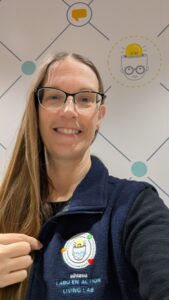
Christie Brien. Photo Courtesy Christie Brien
The Living Lab’s mobile cart, which features games that both parents and kids can participate in, is always popular. The games deal with different aspects of child development and parents get to see how children learn from the games. Brien says that so far, they’ve had about 5,000 participants contribute to the research the lab is doing.
“All our on-site researchers (including undergraduate, graduate, and post-doctoral students) are really knowledgeable and can answer most questions that parents have,” says Brien.
The museum features studies on-site, but there are also opportunities to participate in studies online should an in-person visit not be convenient. “Either way,” says Brien, “parents’ and kids’ participation and engagement are always appreciated.”
The Living Lab is co-directed by three University of Ottawa professors. Dr. Chris Fennell from uOttawa’s School of Psychology wants to understand how kids learn language, which the Living Lab’s two-pronged approach helps him to do. The lab looks at how children think and reason and how they learn.

Christopher Fennell. Photo Courtesy Christopher Fennell
“I study bilingual language learning,” says Fennell, “and focus on what the science says about learning two languages. Having bilingual participants really helps my research.”
Dr. Cristina Atance, also from uOttawa’s School of Psychology, says parents learn a lot about their child by watching them participate in the research. “My work focuses on how young children develop the capacity to think about the future,” she says. “Having parents witness their child starting to plan or save within the context of a study is really eye opening for them.”
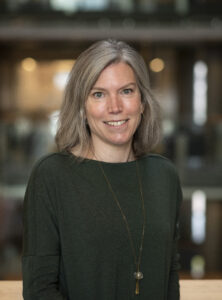
Cristina Atance. Photo Credit University of Ottawa
Dr. Tania Zamuner of uOttawa’s Department of Linguistics studies how children in the toddler years through school age learn language.
“We look at everyday situations, like understanding a new or unfamiliar accent,” says Zamuner. Her research also examines whether saying or reading words out loud helps memory and learning.
“Speaking aloud doesn’t always help children the same way it helps adults,” she says, “and that tells us one approach doesn’t fit every age.”
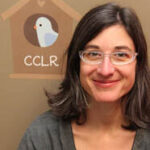
Tania Zamuner. Photo Credit Natalie Dion
For all three of these professors and the museum, a critical goal is to provide parents and the public with accessible, accurate, and evidence-based information about child development.
“From babies to school-aged children,” says Atance, “we’re really focused on how children learn and to provide the information from our research to parents and caregivers to give them insight into their child.”
-30-
More about the Living Lab
The University of Ottawa Living Lab is open
Thursdays through Sundays from 10 a.m. to 3 p.m., and Tuesdays and Wednesdays by appointment. For more information, visit uottawalivinglab.weebly.com/