


Roots of Empathy educates both the mind and the heart. This award-winning program turns 30 this year
Editor’s Note: This story was a part of the series You can do it, which ran in the Spring 2026 issue.
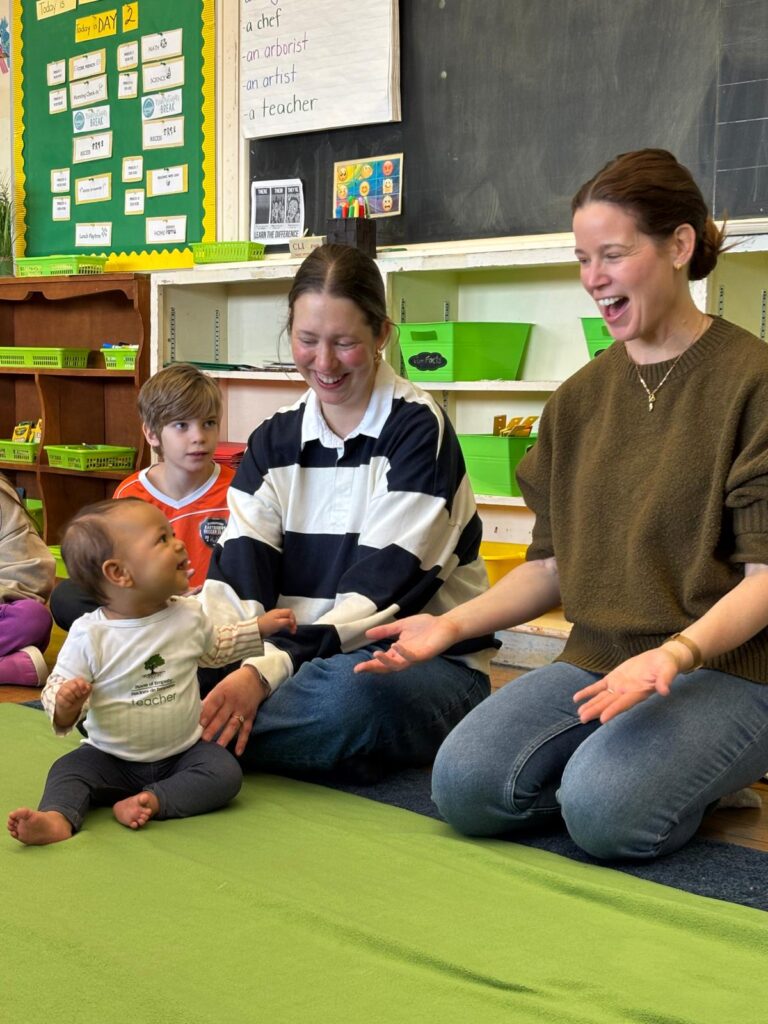
A Roots of Empathy visit. Photo Courtesy Roots of Empathy
Around this time of year, Marianne Harvey is on the search for volunteers – many of whom have yet to be born.
As the Ottawa coordinator for the award-winning international program Roots of Empathy, one of Harvey’s roles is to find local parents and their babies who will be between two and four months old for the start of the program in 2026-2027 school year. Those “tiny teachers” and their parents are instrumental to helping children develop empathy.

Marianne Harvey. Photo Courtesy Marianne Harvey
What is Roots of Empathy?
An evidence-based classroom program designed to foster empathy and emotional literacy in children ages five to 13, Roots of Empathy celebrates 30 years in 2026. In Canada, the program is delivered in English and French and reaches urban, rural and remote communities including Indigenous communities. In addition to being in every province in Canada, the program is also in New Zealand, Australia, the United States, Northern Ireland, the Republic of Ireland, England, Wales, Scotland and Norway.
With a mission to build caring, peaceful and civil societies through the development of empathy in children and adults, Roots of Empathy has reached 1.2 million children globally to date. In the current school year in Ottawa, there are 56 pairs of parents and tiny teachers in schools in the Ottawa Catholic School Board, the Ottawa Carleton District School Board and at Elmwood School.
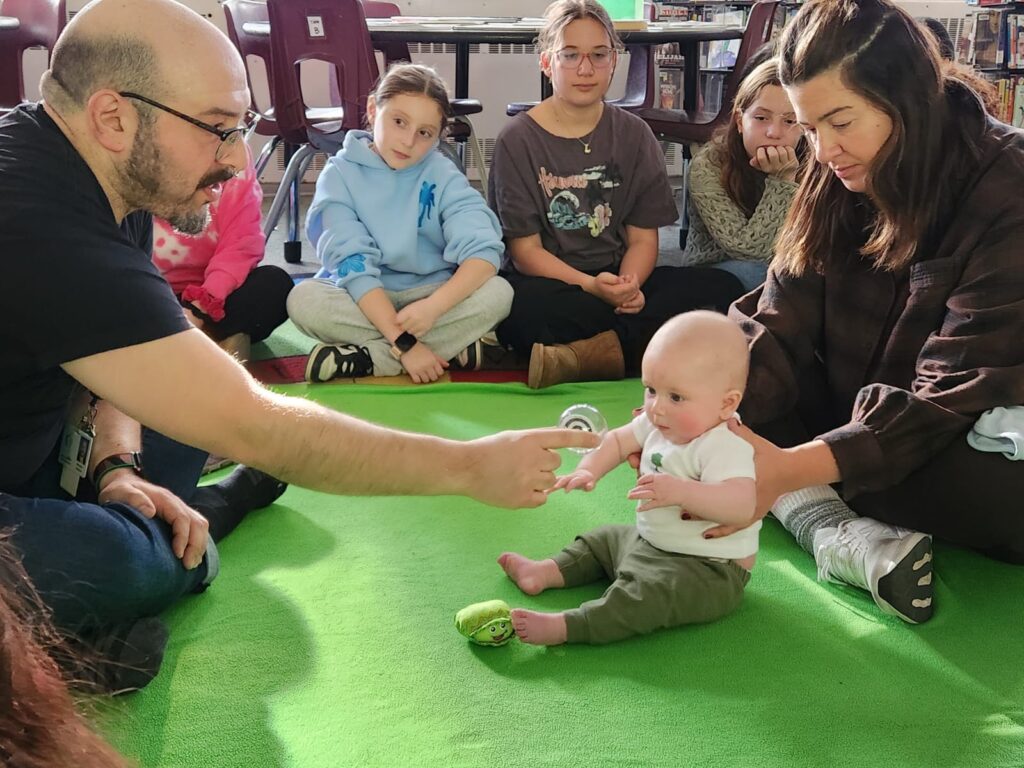
A baby interacts with a class during a Roots of Empathy visit. Photo Courtesy Roots of Empathy
Growth of the organization
In Canada over the last several years, most of the growth has been seen in the French and Indigenous communities, Roots of Empathy founder, president and CEO Mary Gordon told Parenting Times Magazine. Gordon, who also chronicled the creation of the program in the book, Roots of Empathy: Changing the World Child by Child, adds that the program is equitably spread across Canada.
From the very beginning, Roots of Empathy has also recruited parents and babies with exceptionalities such as Down syndrome, cleft lip and cleft palate to volunteer. Families of all kinds are welcome to volunteer.
“A family is who shows up and loves you unconditionally. That’s our definition of family,” Gordon says. “It’s not gender-related, and it’s not race-related. In Canada we’re just thrilled to show the children differences of any kind because our shared humanity isn’t what we look like. It’s about the fact that we share feelings.”
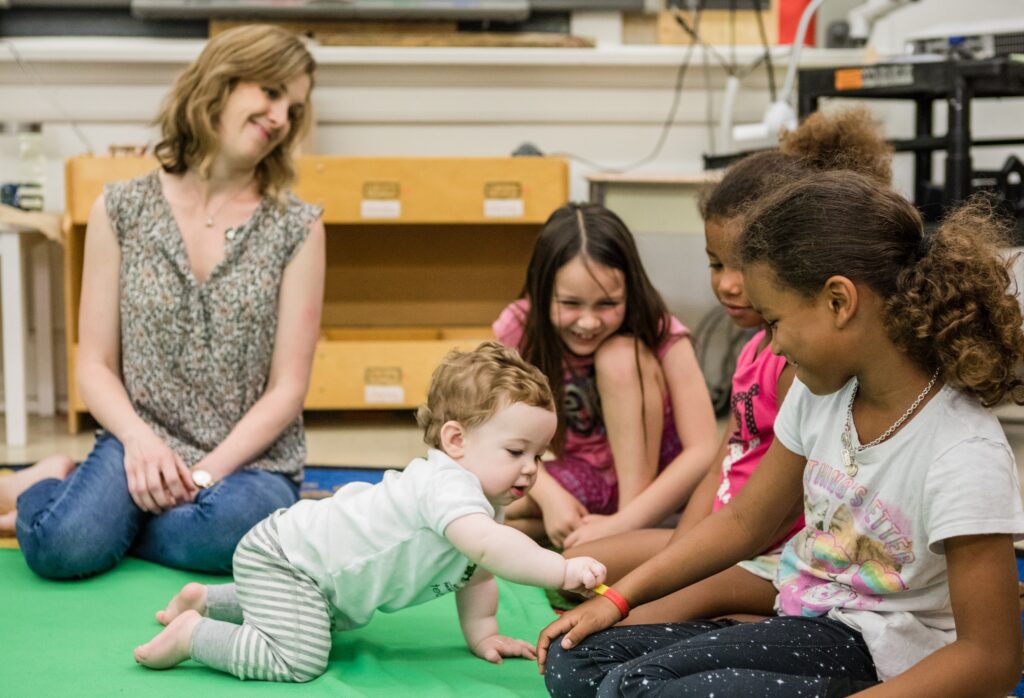
A Roots of Empathy visit. Photo Credit @MelanieGordonPhotography
Tiny teachers and their parents
Once Harvey connects with parents-to-be about being a part of the program, she arranges to contact them after the baby’s birth.
Harvey also works with staff at the schools where Roots of Empathy is run, as well as matches volunteer instructors with mentors and parents and tiny teachers.
Parents and tiny teachers commit to nine visits (which begin following the baby’s first vaccinations) throughout the school year – roughly once every three to four weeks.
“We want the children to witness the development of a baby through the first year of their life,” says Gordon. “The longer you stretch it out, the deeper the experience.”
The children observe the growth of a baby in all domains – physically, cognitively and emotionally.
“They see the baby learn to sit up,” says Gordon. “They see the baby stand up. They see many firsts for the baby, like the baby trying a new food. They see all of these incredible milestones, but especially the emotional milestones.”
Although anyone is welcome to participate, tiny teachers and their parents often come from a school community, says Harvey. While some of the parents have had friends who have been in the program, Harvey is currently working with two parents who are teachers on maternity leave.
“That’s another way that we get tiny teachers in,” says Harvey. “Teachers want to do it because they know about it and want to go back to their own school.”
Parents who are not teachers will learn a lot about child development, adds Harvey, as well as get an opportunity to bond with their baby. “It’s a fantastic experience for the families themselves to be a part of.”
Building community relationships
Recently, a parent in one of Harvey’s classes was nearly brought to tears. “The kids absolutely adore her baby and she felt the love they had,” says Harvey. “They are so excited when the baby comes to visit.”
Those relationships last. It’s not unusual to have parents and their former tiny-teachers pay visits to their school after their role in the program has ended.
Making a difference
Sometimes teachers of older children wondered if some of their students might be indifferent, says Gordon.
“They may initially come across as disinterested or inattentive, but when the baby arrives the student becomes completely engaged and curious,” adds Harvey. “They are so respectful and caring of their new tiny teacher, it’s like they are a different person.”
In a Roots of Empathy class, everyone is on equal footing, says Harvey. The curriculum has no evaluative component to it, which makes the students more apt to participate.
Teaching empathy
When children meet the baby for the first time, the baby is completely helpless, says Harvey. “To see her grow so rapidly and develop over the year into this feeling little being who has made a connection with all of them, I think empathy is just bound to happen.”
Whatever the baby is feeling is brought back to the students so that they discuss feelings, communication and temperament.
“These sorts of things are happening in every lesson,” says Harvey. “It doesn’t matter where you come from or who you are. Feelings are valid and you need to acknowledge other people’s feelings.”
The search for volunteer instructors
As essential as the tiny teachers and their parents are to the program, Roots of Empathy could not be run without volunteer instructors, who come from a variety of backgrounds including education, social work, guidance and healthcare. Harvey first learned about the Roots of Empathy program as a school principal. After retirement, she volunteered as an instructor with the program.
Supported by a mentor, every new instructor attends a mandatory three-day training session and a mid-year training day in order to be able to accompany parents and tiny teachers into classrooms to deliver age-appropriate programming that have links to classroom curriculum such as math, literature, art and music.
Roots of Empathy programming is divided into nine themes, with three classroom visits (a pre-family visit by the instructor only; family visit by the parent, tiny teacher and instructor; and post-family visit by the instructor only) supporting each theme – a total of 27 classes spread over eight to nine months.
Backed by research
Research shows that Roots of Empathy reduces aggression and bullying, increases sharing, caring, and inclusion, and promotes resilience, well-being and positive mental health.
“Researchers have been fascinated that I’m using empathy as the vehicle for helping children become resilient and develop a whole level of confidence,” says Gordon. “We have rock-solid peer-reviewed published research. We know it works. In every case, it works.”
A new milestone
The program is now 30 years old and still winning innovation awards around the world, says Gordon, who is herself a recipient of numerous awards including the Governor General of Canada Innovation Award for social innovation, an Order of Canada, an Order of Ontario, an Order of Newfoundland and Labrador, a Queen Elizabeth II Golden Jubilee Medal and a Queen Elizabeth II Diamond Jubilee Medal.
“The curriculum changes as the world changes, but the basics of it do not change,” Gordon says. “It’s learning from the emotions of a baby to understand your own emotions, and the emotions of others and then to be able to connect to the other children in the class.” Roots of Empathy’s definition of empathy is to be able to feel with the other, says Gordon, and for that reason, there is no bullying in a Roots of Empathy class because everyone knows what it feels like.
As for the parent and their tiny teacher, they touch more than just the classroom with their visits, adds Harvey. “It’s the whole school,” she says. “Many of the students hear about the program and know about the baby.”
-30-
Learn more
Rootsofempathy.org
Want to get involved in Roots of Empathy?
Contact Marianne Harvey at mharvey@rootsofempathy.org
“Not only do children become their own best friend, but they learn how to make a friend. And in school, that’s your silver bullet – being able to connect and make a friend and know that someone’s got your back.”
-
Mary Gordon on Roots of Empathy