


Learning to swim often happens in youth, but it’s not the case for many adults in Canada
Editor’s Note: This story was a part of the series You can do it, which ran in the Spring 2026 issue.
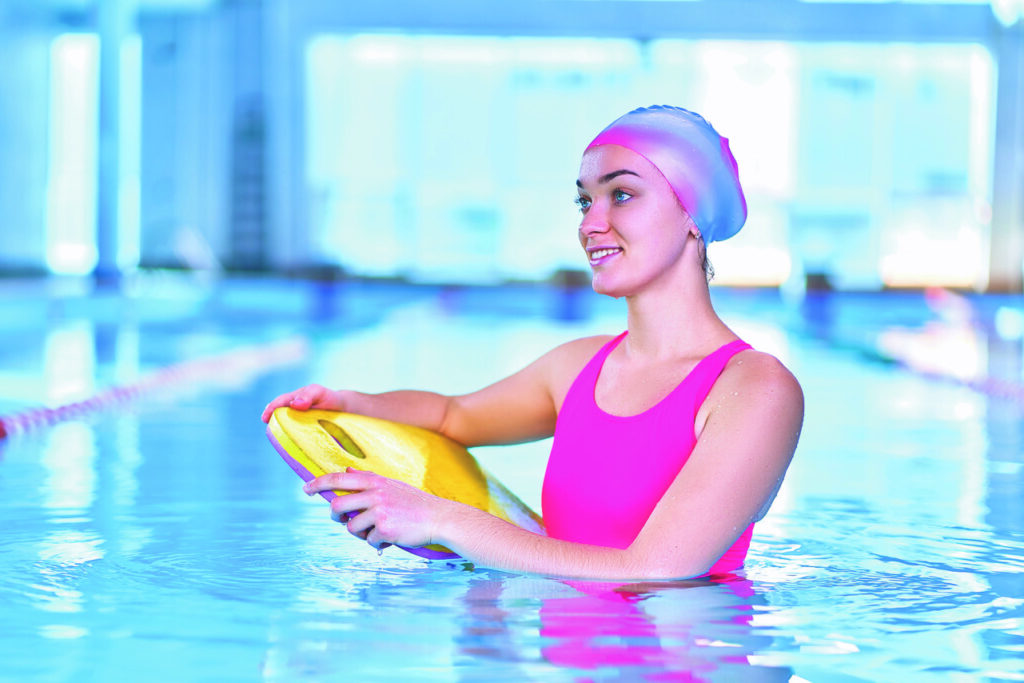
Photo Credit Depositphotos
I see the kid who cannonballs without hesitation. I see the teenager pretending not to be scared of the deep end. And lately, I see something else, adults standing quietly at the edge of the pool, toes curled over the tile, trying to look braver than they feel.
I’ve been a lifeguard for almost four years, and one of the biggest changes I’ve noticed isn’t louder kids or busier summers. It’s the steady increase of adults signing up for beginner swim lessons.
“There has been a huge increase in adult enrollment,” says Christina Sarofeim, a supervisor who oversees weekly swim programming at Walter Baker Sports Centre.
“We only used to have three instructors teaching two classes each, and now we have up to seven instructors teaching at the same time.”
It also reflects a broader reality. According to the Red Cross, about 52 per cent of Canadian adults cannot pass a basic swim test, meaning many are navigating water without strong foundational skills.
They arrive after work, gym bags slung over their shoulders, goggles still stiff from the packaging. Some talk too much to hide their nerves. Others barely speak at all.
Almost all of them carry the same thing: uncertainty.
The skill everyone thinks you should have
Swimming is treated like something everyone should just know. It sits in the same category as riding a bike or tying shoes. But that assumption hides reality.
Some people grew up nowhere near water. Some families couldn’t afford lessons. Some had frightening experiences in lakes or pools and never went back.
For others, the reason is something much bigger.
Kalai Arudchelvan was 53 when she decided to take swimming lessons for the first time. Growing up in Sri Lanka, she says she “didn’t have the chance to learn swimming when I was young because there was a war in Sri Lanka, and there wasn’t a swimming pool in my town.”
Sarofeim says that’s something she hears often.
“The most common reasons adults give for not learning earlier would be that they never had the time or that they came from a country that didn’t promote water safety in kids,” she says.
By adulthood, swimming can feel like something you’re expected to have figured out already. But as Arudchelvan’s experience shows, it’s not always about ability.
For many adults, the hardest part isn’t learning, it’s starting.
“The scariest part of my first lesson was putting my face in the water and trusting that I could breathe properly,” Arudchelvan says. “I was especially uncomfortable in deeper water because I wasn’t confident about floating or controlling my breathing.”
That hesitation is common, says Sarofeim. “Adult learners are more scared of the water [than] children.”
Why fear gets louder with time
Psychologists explain that fear grows when it’s never challenged. Avoiding something uncomfortable might bring temporary relief, but over time it reinforces the idea that the threat is bigger than it really is. When that fear attaches itself to identity, “I’m just not athletic,” or “I can’t do that,” it becomes harder to untangle.
Adults approach learning differently than children. “Adults choose to be there,” Sarofeim says. “As a result, they are more attentive, receptive to feedback and eager to learn. They tend to learn at a quicker pace.”
Thinking about lessons? Start here
For adults considering lessons, the biggest barrier is often just taking the first step.
Arudchelvan understands that feeling.
“I would tell them that it’s completely normal to feel afraid,” she says. “Being nervous doesn’t mean you can’t learn. It just means you’re stepping outside your comfort zone.”
Sarofeim emphasizes that communication is key. “The best way to ease into learning is to have open and honest communication with the instructor,” she says. “It is important to let them know about previous experience or fears, and to show up weekly and practice outside of class time.”
The ripple effect of courage
From my chair, I’ve watched people confront something they’ve carried for years. I’ve seen the moment someone realizes they can float. I’ve heard entire lanes erupt in applause for a few seconds of independent movement.
Those cheers aren’t really about swimming. They’re about something deeper.
“It’s not just about learning movements in the water,” Arudchelvan says. “It’s about building confidence and overcoming those feelings.”
-30-