


As of 2020, 35 percent of Canadian youth aged 15 to 19 have tried vaping. A leading organization shares the signs – and the risks – of experimentation
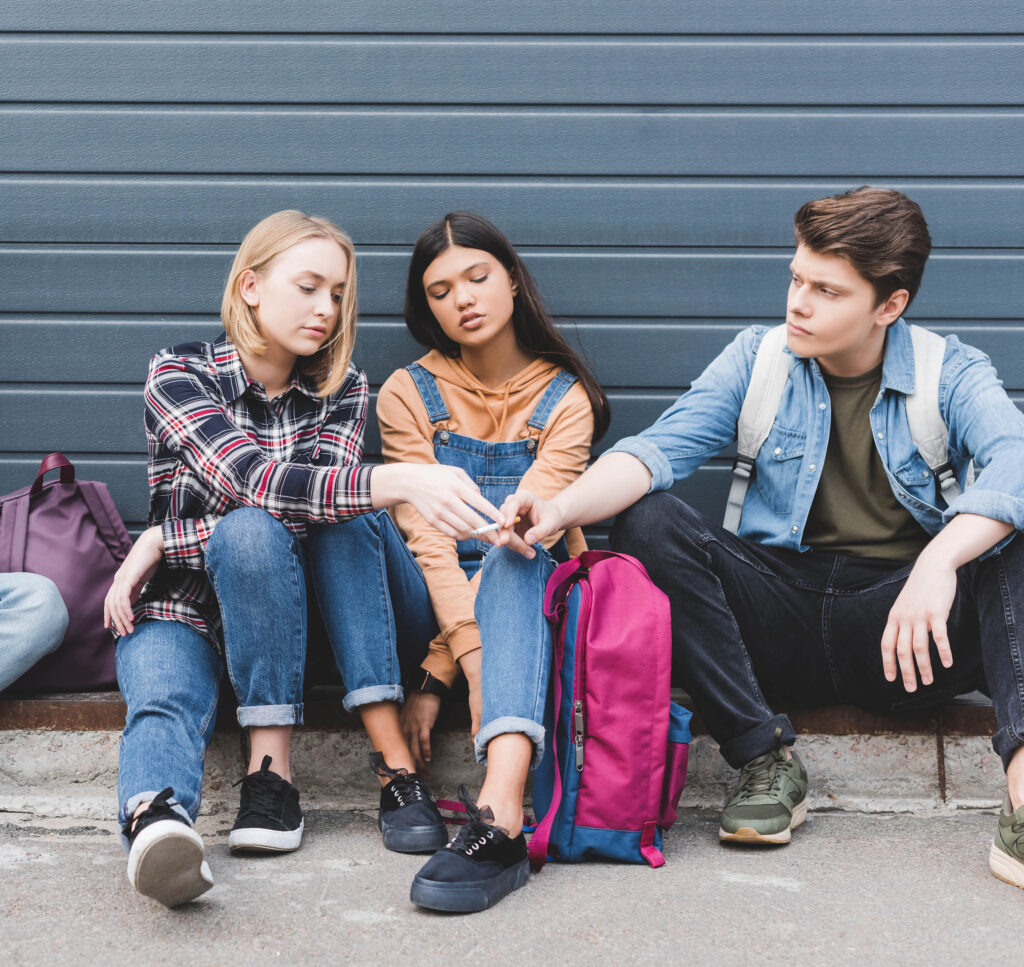
Photo Credit: Depositphotos
Two years ago, Sarah L. was sorting her son Ethan’s laundry when she found a vape pen in the 13-year-old’s pants pocket.
“I think I was more disappointed than anything and I let him know this,” says the Ottawa mother of two, who asked that their last names be withheld to protect their family’s privacy. “We had talked about it when he was in Grade 5 or 6, he knows how we feel about it and we thought he’d be strong enough to resist any peer pressure but at the same time, I was his age once. I know it can just be a phase.”
The back-to-school season can mean more than classes, new routines and seeing friends on a daily basis. For many pre-teens and teens, it also means more time away from home and potential exposure to some not-so-healthy habits.
“In Ottawa, we have many different substances that are around,” says Melanie Davis, executive director and CEO of Physical and Health Education (PHE) Canada, the country’s recognized leader in physical and health education.

Melanie Davis. Photo Credit Lindsey Gibeau Photography
Among Ottawa’s young people, PHE Canada sees use of alcohol (the most commonly used) followed by cannabis, opioids, vapes, cough/cold medicines, followed by other substances and then tobacco cigarettes.
“While youth smoking rates are in decline, there is a new epidemic sweeping the next generation – vaping,” says Davis, noting PHE Canada’s Students Together Moving to Prevent Substance Use program.
The school program, which has a goal to reduce substance use (including smoking, vaping, cannabis and alcohol) in the student population, has found that as of 2020, 35 percent of Canadian youth aged 15 to 19 have tried vaping.
“Vaping is really prevalent and on the rise in schools,” says Davis. “We’ve even had youth come to us and say it’s inevitable that [they] will try these products.”
That’s where PHE Canada comes in.
Through its programs and professional development services, PHE Canada helps ensure every child and youth in Canada has the knowledge, skills, and attitudes to lead resilient, active, and healthy lives.
Although alcohol, cannabis, vapes and tobacco are illegal for young people, they are legal for adults. Due to their legality, there are different norms around these substances, Davis says. “As an organization, we focus on these legalized substances in order to recognize that young people’s experience with them is different from illicit drugs because they can be normalized within their environments.”
Why youth use substances
There are many reasons why youth may try or use substances, says Davis. Vapes, for example, have flavours which are designed to appeal to young people. They may be used to reduce stress or to cope with anxiety.
“During COVID, there were very high numbers of young people recognizing that their mental health wasn’t good,” says Davis. “We’re out of the pandemic time… but we have not seen that snapback. We have an epidemic of mental health concerns that young people are facing. You layer that on to access, peer pressure and the developing brain and you start to see a picture of what young people are really grappling with.”
Other times, young people are using substances to fit in. “There’s a sense of belonging that they’re getting from doing this together,” Davis says.
Social media is also partly to blame, as well as advertising. Access to substances is also a factor.
“Often times, families have alcohol in the home, they have vapes in the home, they have cannabis in the home, and so there’s this ease of access,” says Davis. “If it’s not in your home, maybe it’s in a friend’s home. Maybe the friend has older siblings who it is legal for.”
PHE Canada also examines usage among different population groups. Youth in disadvantaged populations and racialized groups are more likely to try substances, says Davis.
What young people are facing today
Commercial tobacco
This is distinct and different from traditional, sacred tobacco, says Davis. “Tobacco that is processed, packaged and sold in e-cigarettes, cigarettes, cigars and cigarillos… is a highly addictive drug which contains more than 4,000 harmful chemicals.”
Nicotine
Young people are more at risk for the addictiveness and the harm of nicotine, which is found in cigarettes, than adults are. Because brains continue to develop through the mid-20s, nicotine “affects the ways the connections form in the brain,” Davis says.
Nicotine can also affect attention and learning, as well as increase anxiety, mood swings and irritability. Dependence on nicotine also causes sweating, insomnia, agitation, lack of focus, affects short- and long-term health and leads to lack of concentration, confusion, attentiveness, gaps in memory, slower reaction time, impaired decision making, fear and panic. The younger a person starts smoking, the more difficult it will be to quit later on.
While nicotine usage among students in Grades 7 and 8 is still “quite low,” the numbers jump once students are in high school. PHE Canada reports that in Ottawa, 8.6 percent of students in Grades 7 to 9 have reported trying a cigarette and 16.4 percent of youth aged 15 to 19 have reported smoking a whole cigarette. Of the latter, 7.9 percent of these youth are current smokers.
Vaping
With cigarette sales down, “the industry is dealing with loss of profits… In order to survive, they are promoting [vapes],” says Davis.
In addition to chemicals, there are flavourings and targeted packaging – some vapes are made to look like well-known brands of children’s cereal, candy and juice boxes – that are designed to appeal. Instead of banning vapes, Canada has the intention to ban the flavours that may make vapes attractive for young people.
“We want to stop them from getting hooked,” says Davis, but it’s not easy: “in Canada there’s 38 percent non-compliance to our government’s rules to ban flavour,” says Davis. “Ninety percent of online sales that operate in Canada do not meet the compliance standards in regards to the legal vaping age. The stat is astounding.”
PHE Canada reported a 112 percent increase in vaping between 2017 and 2019, and during the pandemic, vape usage increased among youth, says Davis.
“What we’re fearing… is that it is inevitable that young people will come into contact with vapes throughout their childhood and youth,” Davis says. E-cigarette use sometimes transitions to other forms of substance use such as nicotine pouches and smoking.
Vaping often goes “hand in hand” with energy drink consumption, which Davis says is “very high” among youth: 30 to 50 percent of teens and young adults regularly consume them in order to increase alertness or improve sports performance.
Energy drinks are also associated with significant health risks including insomnia, anxiety and heart palpitations.
Alcohol
Alcohol consumption decreases judgment and reaction times and has negative long-term effects in terms of heart disease, elevated blood pressure and risk of stroke.
“It also affects young people’s ability to show up to school and participate in school and all of the kinds of pro-social or pro-health activities that they could take up otherwise,” says Davis.
Parents need to be educated
“I did not grow up in a generation where there were vapes or where cannabis was legal, so I need to be educated in terms of how to deal with subject matter or content that I haven’t ever experienced,” says Davis.
Davis advises that parents first educate themselves and then recognize the warning signs: “going for a walk randomly throughout the evening or just before bed,” she says. “Friends show up and they all go out rather than staying there. Problems at work and at school, constantly having to leave the classroom and [frequent] bathroom breaks. You can often see a big shift socially. Hanging with a new group; financial challenges – not having money or always asking for money; changing sleep and energy, neglecting responsibilities and kind of risky behaviours.”

Photo Credit: Depositphotos
Parents need to act
The conversations with young people will differ based on what they’re exposed to, says Davis.
- Do not snap in the moment Davis advises picking a calm time in a place with no distractions or siblings present, where parent and child can both feel safe and comfortable.
- Speak without judgment “This is about recognizing where their brain’s at, the peer pressures, the access points, and acknowledging that they’re immersed,” says Davis. “They’re seeing it on social media. They’re seeing it through their peer groups, through schools, maybe in the adults in their lives.”
- Show you care and ask questions “I understand that this is around you all the time, and I understand that you’re curious.” “Let’s talk about you know, what are you seeing?” “What are you hearing?” “You don’t need to wait for a moment where you think that they’re vaping,” says Davis. “You can have this conversation ahead of all of that.”
- Offer to help navigate the space “Sometimes you get a ‘I don’t need any help,’ but remain open. They may go away and come back. [The topic] may come up in little snippets of conversation.”
- Having these conversations with young people can be hard “It’s really important to remember that stigma exists when we’re talking about substance use with young people,” says Davis. “Youth want agency, empowerment and autonomy, but they also need support. Trusting adults is one of the key determinants of their well-being.”
This technique worked for Sarah, whose son Ethan is now 15 and doesn’t vape at all. “My advice to other parents,” she says, “is not to overreact. Teens tend to shut down if you do. Talk to them about why it’s happening and let them know you care.”
-30-
Useful websites
ottawapublichealth.ca/en/public-health-topics/drugs.aspx
ottawaheart.ca/patients-visitors/tools-and-resources/cannabis-and-your-heart-health
phecanada.ca/teaching-tools/stomp
canada.ca/en/health-canada/services/smoking-tobacco.html
“Nudging and encouraging young people to make safer decisions is really important as they get closer to either never using or cessation.” – Melanie Davis